

The pathway to the pros runs through Wisconsin
Badger hockey develops players for the majors, the minors and for life
Kali Mick
2/12/2026
The Kohl Center lights dim as a crowd of 10,000 fans tilt their heads upward in anticipation. A montage of vintage hockey moments begins to play on the video board, and the familiar bells of Metallica’s “Enter Sandman” start to toll, signaling the start of UW’s iconic entrance.
The voice of Badgers legend Mark Johnson rings out: “Welcome to Wisconsin hockey.”
“Home of 44 All-Americans,” adds Barry Richter, Badger-turned-NHL star.
Other alumni take turns on screen – Chris Chelios, Cole Caufield, Joe Pavelski and more – recalling great moments in Wisconsin hockey history.
“Ninety-two NHL players. Fifteen Stanley Cup champions. Twenty-six Olympians. Two Hobey Baker winners. And of course, six national championships.”
These names and moments are more than just milestones — they’re proof of a culture built to develop players at every level.
Wisconsin men’s hockey has long been one of college hockey’s most dependable pathways to the pros. The Badgers routinely send alumni to the National Hockey League (NHL), American Hockey League (AHL) and ECHL, and Head Coach Mike Hastings’ current roster carries that same ambition. Players arrive in Madison by different paths, but they leave with pro-ready habits forged in a culture of accountability, tradition and daily growth. From experienced staff to state-of-the-art facilities, Wisconsin provides its student-athletes with every resource they need to thrive after college, on and off the ice.
Emberson’s lessons in maturity and momentum
Defenseman Ty Emberson, the 92nd Badger in the NHL, says that the leap from Wisconsin to the pros came with both on-ice adjustments and off-ice lessons. After three years at Wisconsin from 2018 to 2021, he signed with the (former) Arizona Coyotes and began his AHL journey with the Tucson Roadrunners before being traded to the Hartford Wolfpack, affiliate of the New York Rangers, in 2022.

“Wisconsin developed me a lot with the maturity level of understanding what it takes,” he said. “All the coaches I had at Wisconsin were really good at helping me understand how to manage the game. Every play isn’t do-or-die — there are so many games in the season that a lot of it is just making sure you don’t mess up too badly. You’re minimizing your losses at certain points.”
Emberson also credits Wisconsin for instilling habits off the ice, from managing schedules to handling adult responsibilities.
“Those first couple of years in the pros, you’re on your own,” he said. “I think I was a lot better off than a lot of other people who played major juniors, just because you learn a lot at Wisconsin about being an adult and treating people the right way, being respectful and a good person overall.”
After being acquired by San Jose off waivers in the summer of 2023, Emberson made his NHL debut with the Sharks on Oct. 21, 2023, and has played in the majors ever since. The Eau Claire, Wisconsin, native was traded to the Edmonton Oilers in August 2024, where he still plays. In Edmonton, Emberson skates alongside fellow former UW skater, forward Trent Frederic, and loves the sense of connection being a Badger provides him with.
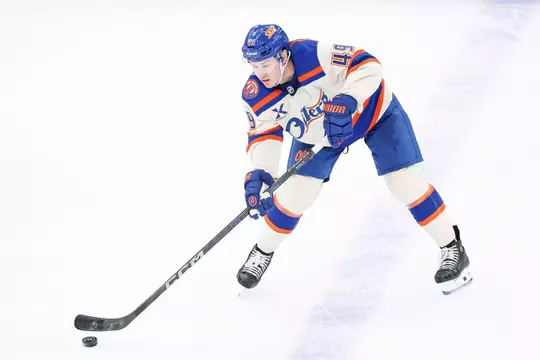
“We’re always playing a lot of other Badger alumni in the NHL,” he said. “There are a lot of us currently, so it’s fun to be able to see them on the road, maybe catch up and grab a bite to eat or talk to them after the game. It’s always good to see a friendly face, and it’s fun to look back on different memories. It’s great to see other Badgers succeeding — there’s definitely a family atmosphere at Wisconsin, which is ultimately the reason I went there.”
Lindmark and De St. Phalle adjust to the grind
For players stepping from Madison into their first few years of professional hockey, the jump is big. Forward Owen Lindmark, captain of the 2024-25 Badger squad, has been adjusting to life in the pros with the AHL’s San Diego Gulls and ECHL’s Tulsa Oilers. He credits Wisconsin with giving him a foundation to handle the transition.
“I would say that we had it a lot better and a lot nicer at school with the facilities and all the resources we had, like the food,” he said. “We’re so well taken care of at Wisconsin. It’s not like we’re not taken care of in the pros, it’s just that at Wisconsin, you have literally everything you could even ask for, and more.”
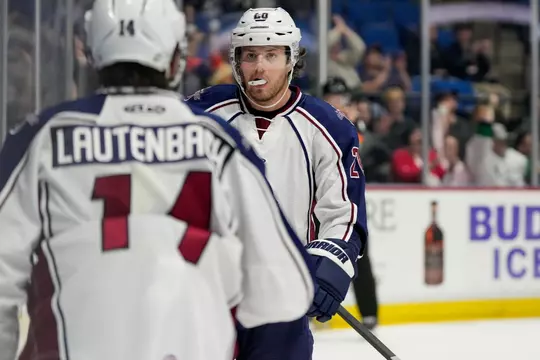
Lindmark says the biggest adjustment is the number of games played per year. In college hockey, you play around 40 games, mostly on weekends. AHL and ECHL teams play 72 regular-season games, often on weekdays, making it harder to maintain a consistent routine.
Mathieu De St. Phalle, a Badger forward from 2020 to 2024, agrees that adjusting to this new schedule is the hardest part of transitioning from college to the pros.
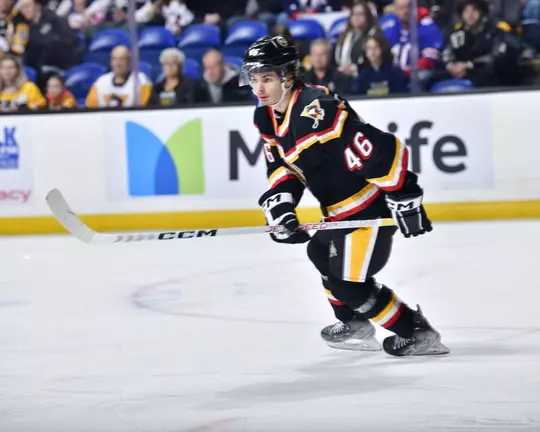
“You have to learn how to take care of your body and stay consistent throughout the year,” he said. “It’s harder to stay healthy — injuries happen, and you have to really pay attention to how your body is feeling and find a way to recover every day so that you’re ready to go.”
After playing his final game in a motion W sweater in March 2024, De St. Phalle immediately signed with the AHL’s Wilkes-Barre/Scranton Penguins, affiliate of the NHL’s Pittsburgh Penguins, to start his pro career. Over the next year, he split his time between the Wheeling Nailers of the ECHL and the Penguins, gaining valuable experience while adjusting to the demands of professional hockey.
“There’s a very thin line,” he said of the difference between the two minor leagues. “I think anybody who plays pro hockey can say that. A lot of guys in the ECHL can play in the AHL, and a lot of guys in the AHL can play in the NHL. It’s a lot to do with opportunity and how you take advantage of it.”
The goal for any player is to make it to the NHL, but the path one takes to get there varies. Even when sent between the minor leagues, De St. Phalle says the maturity and patience he learned at Wisconsin helped him handle each transition.
“I still had a lot of fun with it — we had a really good team,” he said. “Thankfully, the coaching staff down there and the organization are great. I was able to continue my development throughout last year and get good game experience with Wheeling. When I was called up, I was ready for it, and I felt prepared. I had a really good experience with it. It’s a great feeder for the AHL and making that next step as well.”
Pro skates forge alumni connections
The bonds formed at Wisconsin extend long beyond graduation, with one major part of the alumni experience being participating in pro skates over the summer. Pro skates give alumni the chance to work out alongside each other and the current roster, while offering younger Badgers insight into life after college.

“It’s a great resource for the current guys to pick our brains and get some advice from us for when it’s their turn to make the jump,” Lindmark said. “We push them, and they push us.”
De St. Phalle adds, “I told them to enjoy as much as they can at Wisconsin. Not only is it the best four years of your life or the best time playing hockey in your life, but it’s also preparing you for the next level. I think it’s important that those guys have alumni to lean on.”
When Mike Hastings was hired as head coach in 2024, he kept the tradition of pro skates going, with notable names such as recently retired U.S. Hockey Hall of Fame inductee Joe Pavelski and 13-year NHL veteran Jake McCabe returning to Madison to skate with their Badger family.
“That connectivity is something that we want to continue to build,” Coach Hastings said about the importance of developing relationships with alumni. “We always want to let those guys know, not only are they welcome, but they’re wanted back at the Kohl Center.”
Coach Hastings’ impact on pro development
For Lindmark and De St. Phalle, having the opportunity to return to their alma mater makes life after college a little less daunting. Outside of reconnecting with former teammates and offering advice to new Badgers, alumni also get to be (re)acquainted with the culture and style of play implemented under Coach Hastings, something both pros say has greatly impacted their skating.
“The systems we use under Coach Hastings’ staff and the way we play the game is so easily transferable to the pros,” said Lindmark, who played under Hastings for two years. “If you’re a smart player and you’re doing all the little things right to help the team win, that’s going to go a long way in making a name for yourself.”
De St. Phalle, who played under Hastings in his inaugural year in 2023-24, echoes his former teammates' sentiment, highlighting how the structure of daily routines and expectations set by the coach in Madison mirrors professional life.
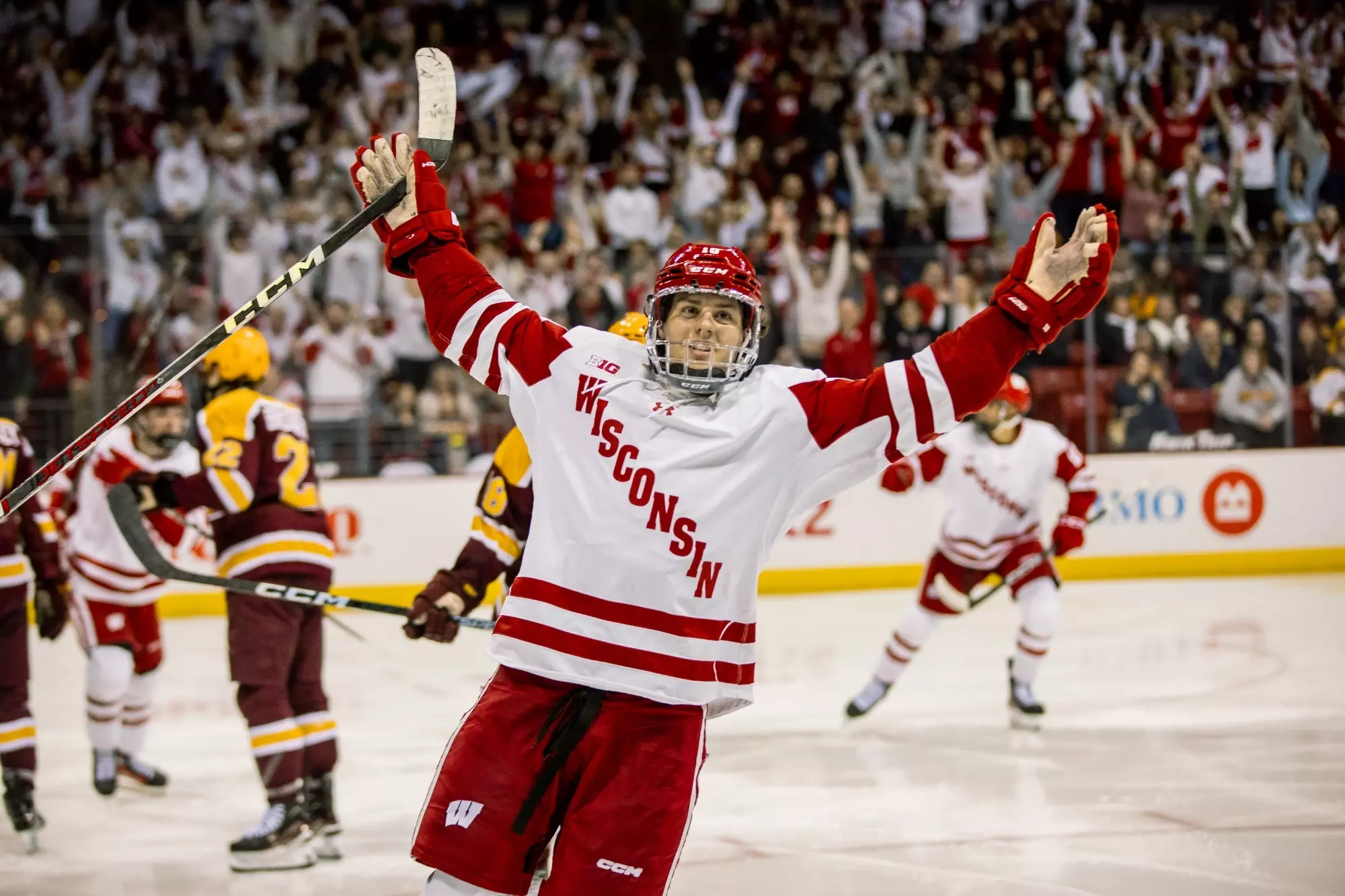


“The coaching staff at Wisconsin — Hastings and all of them — were great to me all year,” he said. “College taught me a lot of those smaller details of the game that really matter in the pros, like stopping on pucks and being consistent from game to game and doing your job. I think the pressure of playing at Wisconsin, a place where sports are so huge, and what that brings can really prepare you for playing professionally as well.”
Though he never skated under Hastings and his staff, Emberson has kept a close eye on the program, and he likes what he sees so far.
“I think the program is in a great spot,” he said. “Coach Hastings brings that blue-collar mindset to the organization. You work hard every day, and you’re rewarded for what you work on. There’s no easy way to success, so I think his mentality is perfect for Wisconsin, and I think they’re going to do a lot of great things over the next couple of years.”
There’s an expectation of success when you pull the Badger jersey over your shoulders. All the resources at Wisconsin, from the athletic side to the academic side to the social side, provide a balance that will help you be successful in the game of hockey and the game of life.Mike Hastings
In Hastings’ two years as head coach at Wisconsin, 11 of 12 graduating seniors under his staff signed professional contracts at the NHL, AHL and ECHL levels after their final games, contributing to the program’s record of preparing players for the next level.
“There’s an expectation of success when you pull the Badger jersey over your shoulders,” Hastings said. “All the resources at Wisconsin, from the athletic side to the academic side to the social side, provide a balance that will help you be successful in the game of hockey and the game of life.”
For Wisconsin men’s hockey players, development never truly stops — it simply changes settings. The lessons learned at the Kohl Center carry into new schedules, new cities and new expectations, while the connections formed in Madison endure, guiding every step.
“It’s pretty cliche, but college is the best days of your life,” Emberson said, reflecting on his time in the cardinal and white. “Once a Badger, always a Badger, as they say.”