Looking Back at Past Olympians: George Poage
July 23, 2008 | General News
As the Olympic Games in Beijing approach, several UW athletes are attempting to qualify and continue the tradition the Badger program has in the Olympics. Watch the Badger Olympians page for updates on our current athletes, as well as a weekly look back at past UW Olympians. Check back frequently as we review our illustrious Olympic history and the Badgers who have made it.
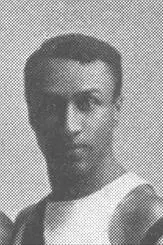
Today's look back features George C. Poage, the first African American to win medals in the Modern Olympic Games.
Poage, a member of the University of Wisconsin's class of 1903, was an extraordinary athlete, who claimed many "firsts" during his life. He is most well-known for being the first African-American to win an Olympic medal.
Poage was born in 1880 in Hannibal, Missouri, but his family moved to LaCrosse, Wis., when he was very young. He first attracted attention while attending LaCrosse High School, where he excelled as both a student and an athlete. On the playing field, he was easily the school's best athlete, while academically he was the second-best student in his class. At his high school commencement in 1899, Poage, the school's first African-American graduate, addressed the assembly as the salutatorian of his class.
The following fall he began his career at the University of Wisconsin where he found great success on the athletic field. He competed with the freshman track squad in 1900 and joined the varsity track and field team for good during his sophomore year. Poage, the first black athlete to run for UW, specialized in the short sprint and hurdle races, and he was a consistent point winner for the Badgers. In dual meets, he would regularly place in several different events.
Poage graduated on time with his class in June of 1903. Not done with his athletic or academic work, however, he returned to the Wisconsin for the 1903-04 school year and took graduate classes in history. Continuing his athletic career, Poage became the first African-American individual Big Ten track champion in league history when he captured first place in both the 440-yard dash and the 220-yard hurdles.
The third Olympic Games were being held in St. Louis in conjunction with the 1904 World 's Fair a few months later, and the Milwaukee Athletic Club sponsored Poage to compete. Before the games began many prominent African-American leaders called for a boycott of the events in St. Louis. The organizers of both the Olympics and the World 's Fair had constructed Jim Crow facilities for their spectators, and they would not allow an integrated audience to view the spectacle.
The Olympic hosts, however, could not prevent an integrated competition from taking place in St. Louis. Poage chose not to heed the boycott and traveled to St. Louis. He made history when he captured bronze in both the 200-yard and 400-meter hurdles, becoming the first African-American to win Olympic medals. He also competed in the trials of the 60-meter dash.
After the Olympic Games, Poage returned to St. Louis to teach at segregated Sumner High School, where he was the head of the English department and helped coach the school 's sports teams. He later moved to Chicago and secured a job as a postal clerk in 1924, where he worked for nearly thirty years until his retirement in the 1950s. He remained in Chicago until his death in 1962 at the age of 82.
Poage became a member of the UW Athletics Hall of Fame in 2003. Click here for more information on the University of Wisconsin Black history.