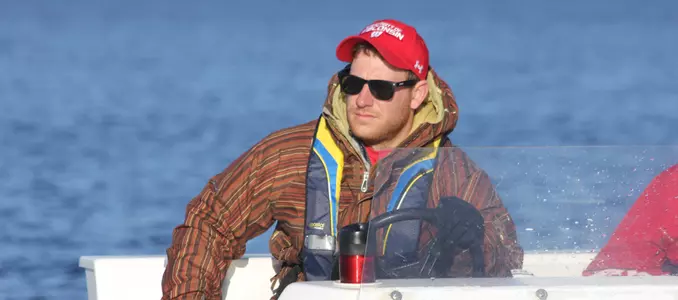
Badgering: Ross Gundlach
May 10, 2017 | Men's Rowing, Andy Baggot
Former Marine Ross Gundlach dreamed of being a Badger after serving his country and joined UW men’s rowing as a walk-on. Now a student assistant coach, he discusses his unique journey, his beloved dog and his undying respect for his chosen sport and its culture.

 |
||
|
BY ANDY BAGGOT
UWBadgers.com Insider
You've been a Marine. You're in the Army Reserves. You've been a Division I student-athlete. You're on pace to graduate from the UW School of Business in December. What do you list first on your resume?
"Marine, absolutely."
It might sound silly, but what was the more challenging role?
"They're at such a high level that it's hard to distinguish one as being more challenging overall. When I came back to college at 25 years old, I didn't really remember all the basic things you need to remember to be a high-level academic. So I had to start at the lowest level in math that's even offered and work my way up all the way through calculus just to even apply to business school, so that was extremely challenging to me. Being a Marine has its own aspects and challenges, obviously. Being 28 years old and walking on to a D-I program in a sport that you've never done and you know nothing about has a whole other set of challenges."
Why was it so important for you to be a Division I student-athlete?
"So, for me, it really was more about being a UW athlete, being a Badger. I can't say for sure, but I probably could have gone on and played football … at maybe some D-II or D-III school, but I would rather be a Badger Frisbee thrower than anything else at any other school. For me, it's always been about being a Badger. The first job I ever had was selling peanuts at Badger football games when I was 12 years old. I think any kid from Madison, the UW has a special place in their heart."
Why join the Marines?
"It seems simplistic and almost unexplainable, but it's because that's the only place you can be a Marine is in the Marine Corps. You can't be a Marine anywhere else. Being a Marine isn't just being tough. It isn't just being smarter than the average man. It's just this cornucopia of extremely high-level skills, but into one person. In the Marine Corps they say it all the time. It's on all their plaques. … They only do two things in the Marine Corps: They make Marines and they win battles. That's it."
Was it something you yearned for growing up or a decision you made later in life?
"A lot of my family is in the military. My great grandpa was a chaplain in World War I. My grandpa, who I was really close to, did two tours in Korea and four in Vietnam. He was UDT (underwater demolition) in the Navy, the program the SEALS were born out of. Several uncles (served), too. For me, I just simply wasn't ready to go to school during the normal college age. I graduated high school and wasn't mature enough and wasn't dedicated enough to go to college. So the Marines helped me gain that in a big way."

You and your dog, a Lab named Casey, have a unique history. She was assigned to you in the Marines as part of a demolitions team. You were separated in 2012 — she remained a government employee while you headed for college — and you were ultimately reunited after she surfaced as a bomb/arson dog in Des Moines, Iowa. She's more pet than partner now, right?
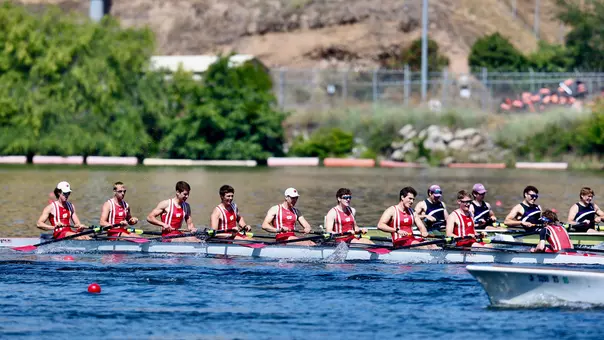
"I still refer to her as my partner. She'll always be a Marine. I'll always be a Marine. We live that college life. I live downtown in a one-bedroom. She lays on the couch. When we just raced at Devil's Lake … she came with us. The crew loves her. All the rowers love her. She lives pretty good."
Des Moines Register Best Videos of 2013: Soldier reunited with bomb-sniffing dogWhat was your best day ever?
"I would say it's yet to come. I'm a huge fan of setting a goal and as soon as it happens just moving on to the next. I find that, especially being from the Marines, if you peak at 22, that's not going to be much of a life. My best days are for sure to come."
What's something you wish you'd known about rowing before walking on to the Badgers?
"Some people either have a lack of knowledge all together or a misconception about rowing and rowers in general, maybe based on movies or on other institutions. But here at Wisconsin, it's all just tough work, no excuses. You'd never think that being in the Marine infantry and being in a D-I rowing program would really have anything to do with each other, except for they're bigger guys involved. Here at Wisconsin, they're very similar. No excuses accepted. No whining accepted. It's all about tough work and just being a strong individual."
So their cultures are very similar?
"Very similar. I would never in a million years have thought they'd be so similar. For me, whereas I thought possibly I'd already been in the only organization on earth that had the smartest men I've ever met and worked the hardest and worked together — that maybe I'd found and lost that community — then I came here. It's very similar. It's very similar. These men are ridiculously intelligent and work as hard as anyone. There may be people that work as hard, but there's no one that works harder, that's for sure."
Taking out some finals stress today on Lake Mendota.
— Badger Rowing (@BadgerRowing) May 10, 2017
How has this experience changed you?
"Maybe it's because I've had a little bit of life experience — I have some foresight and hindsight — but just to be able to be part of the UW alone is a dream come true. … Again, maybe that is because I was 28. There was a good nine, 10 years where I thought that ship was so far gone that it wasn't ever going to be a part of my life. I basically was able to jump on the last train out of town. To be a part of the Badger athletic program, to be an athlete, it means a lot to me. As you get older, it's easier to see why some places are more special than others."
What was your recruiting pitch to allow you to walk on in 2014?
"I called the freshman coach who was coaching the year before I came to UW and said, 'Sir, is it true you can walk on?' It's a little crazy to say — especially at UW — you can walk on to a D-I athletic program, in the Big Ten, having never done that sport before. … So I asked, 'Can an old war dog come try out to be on the team?' He said, 'If you're a D-I caliber athlete, c'mon, you're more than welcome.'"
You left UW to attend sniper school. When you returned you wound up on the coaching staff. How did that come about?
"I gave (assistant) coach (Beau) Hoopman a call and said, 'Hey, if you want me to help out or help some of the guys quit a little sooner or whatever you want, I can.' He said, 'I'll do you one better. Do you want to be part of the (coaching) staff?' My title is student assistant coach, something like that. I help out any way that I can. It's pretty nice. I'm right back in this community that I thought I'd be out of. To be a part of UW Athletics in any sense is a dream come true."
Where do you want to be 10 years from now?
"If all goes according to plan, I'll be attending UW Law School. I have one more semester and I'll finish in December. In November, I'll have to submit my grad school applications and I'll being applying to the University of Wisconsin School of Business for a master's in business administration. I'll be applying to law school at the same time. With any luck, I can do law school and the MBA at the same time. With any luck, I'll have another half-decade with the crew. Ten years? Who knows. Maybe I'll have to stick around and get a PhD."