UW Athletic Hall of Fame: Erica Palmer-Cordes
August 10, 2022 | General News, Women's Cross Country, Women's Track & Field
Young Badger runner won NCAA cross country crown before injury shortened stellar career
UWBadgers.com Insider
MADISON, Wis. — It's not easy catching up with Erica Palmer-Cordes these days. If you want to have a casual conversation over the phone, you can do one of two things: hope that Mother Nature gets involved or have a very flexible deadline.
Palmer-Cordes and her husband, Jared, own and operate a produce farm in Wabash, Indiana. Strawberries and blackberries are among their marquee commodities. Mid-summer is when business is booming.
"We are completely swamped in produce right now," read one text message from Palmer-Cordes, the mother of six. "Can I call you when it rains?
"Sorry," read the next text. "Hopefully you got a little in that humor. It's just a crazy time around here."
Eight days passed before Palmer-Cordes found 15 minutes to talk. It wasn't raining in north-central Indiana. She spoke while driving to deliver blackberries to a nearby winery.
Turns out that not much has changed for those tasked with trying to catch Palmer-Cordes when she's on the run. It was just as challenging from 1998 to 2000 when she starred for the Wisconsin women's cross country and track programs.
Hers was a career that was as brilliant as it was unfulfilling. She did things that earned her a spot in the latest class of inductees to the UW Athletic Hall of Fame, but a series of chronic leg injuries prevented her from maximizing the moment.
"Boy, do I wish it would have ended differently," Palmer-Cordes said.
She came out of tiny Gilsum, New Hampshire (population 752) and spent the first two years of her Wisconsin career wowing those who follow her sport.
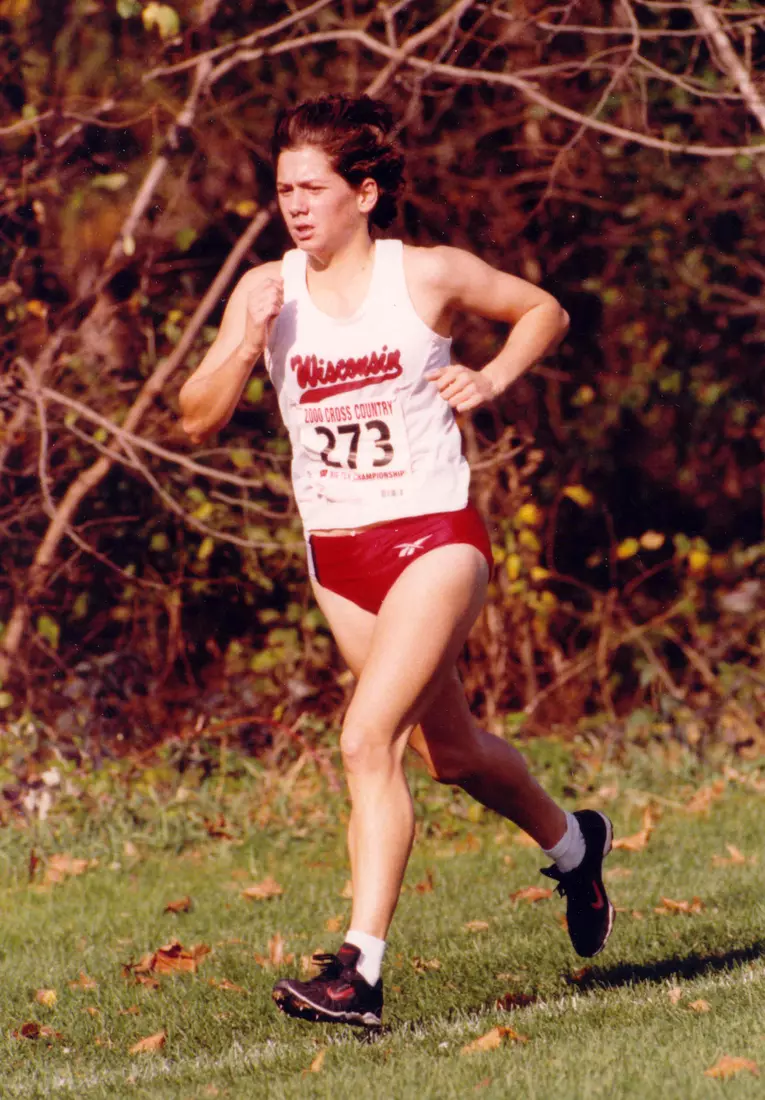
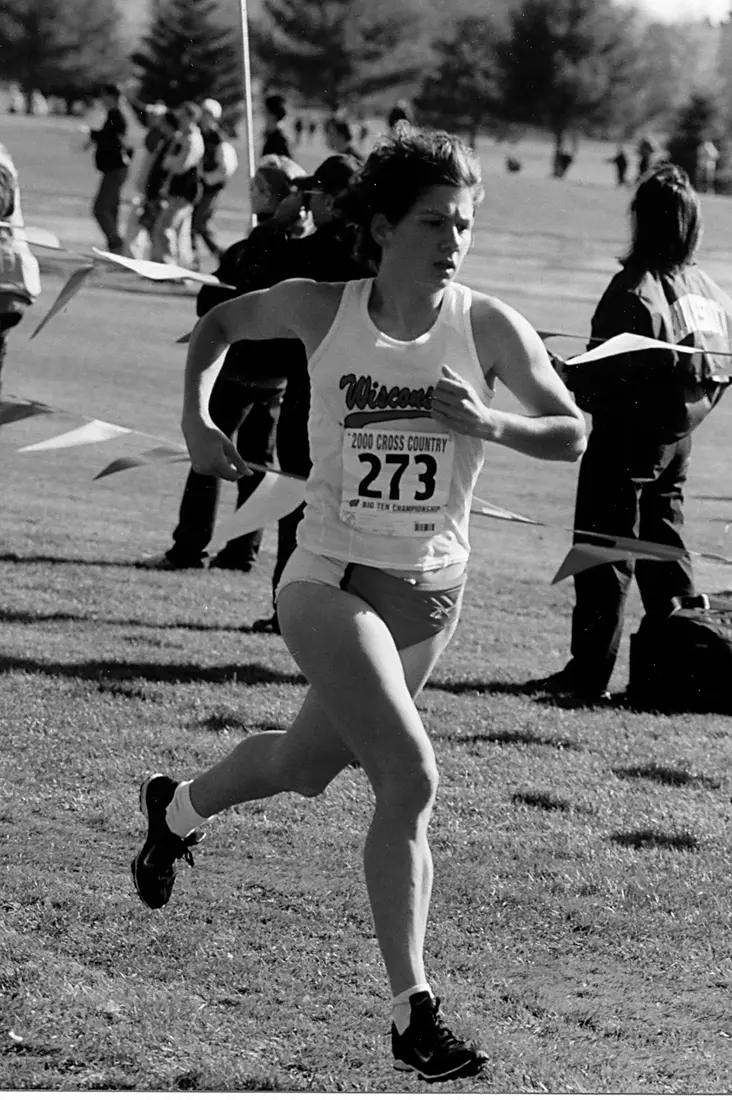
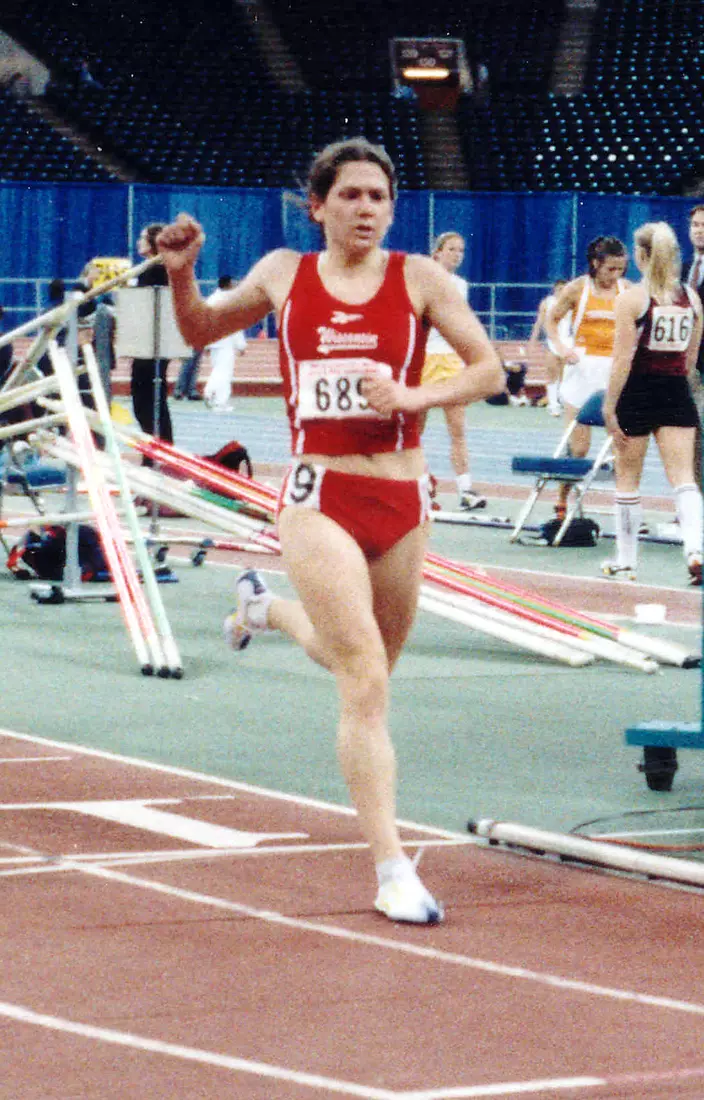
Palmer-Cordes was the first in Big Ten Conference history to be named Freshman of the Year in cross country, indoor track and outdoor track. She was a six-time league individual champion and a six-time All-American. She was seen as a potential U.S. Olympian in the 5,000 meters and 10,000 meters.
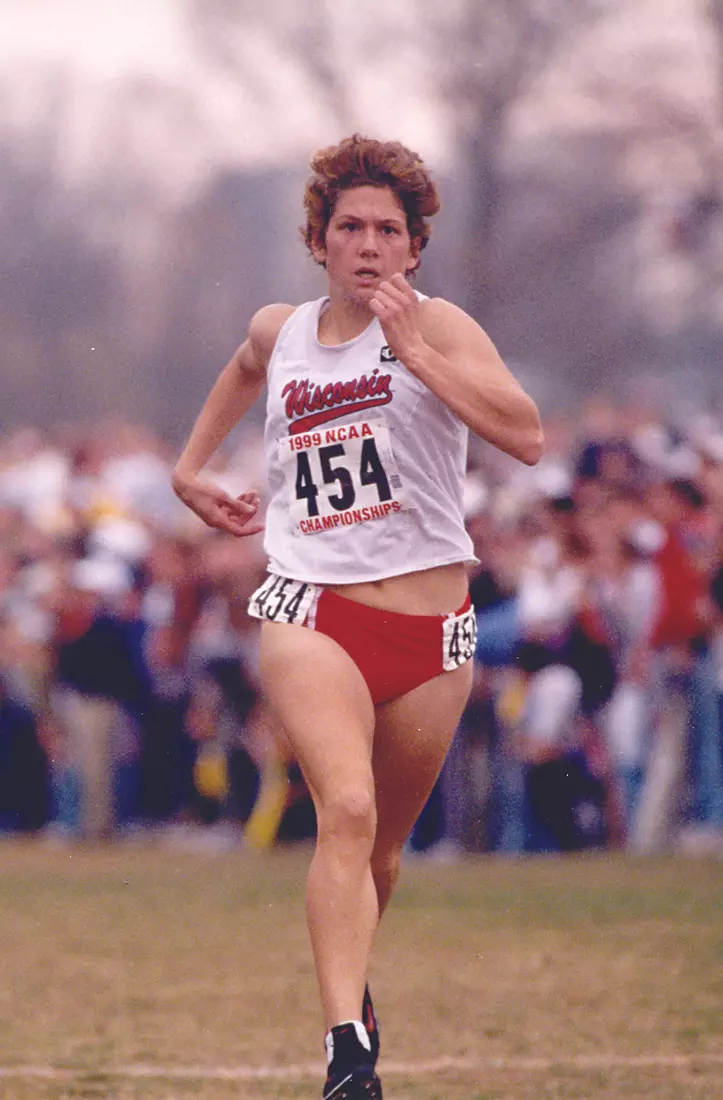
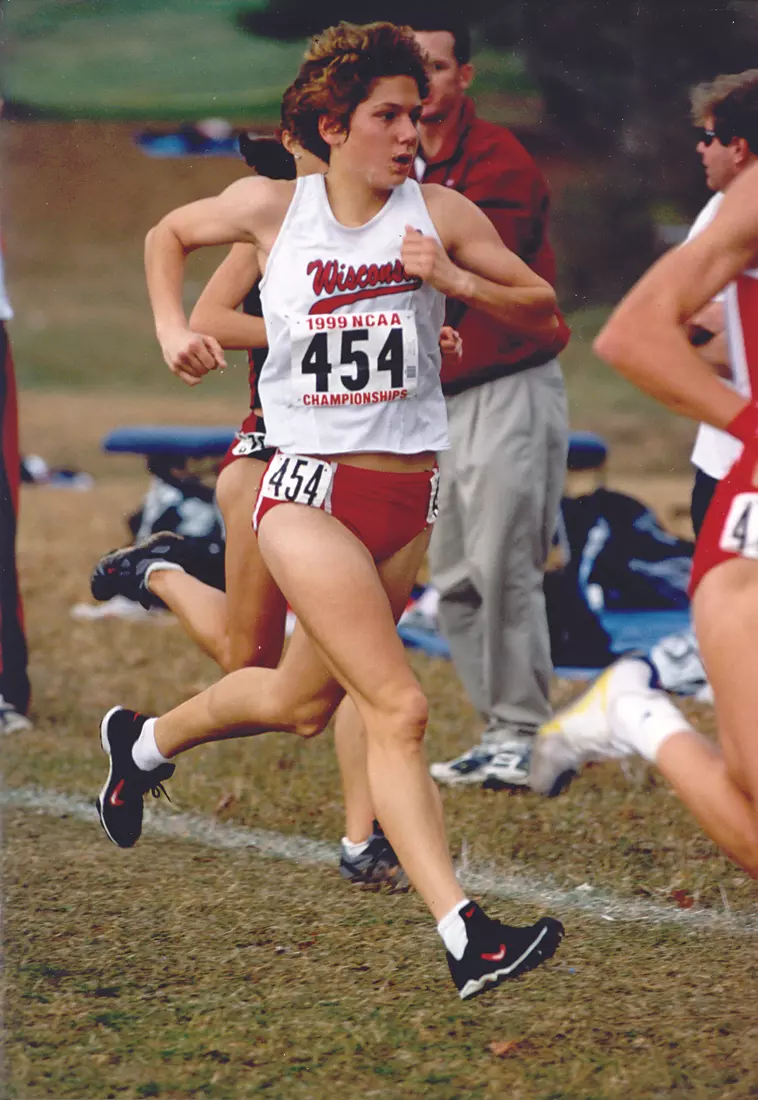
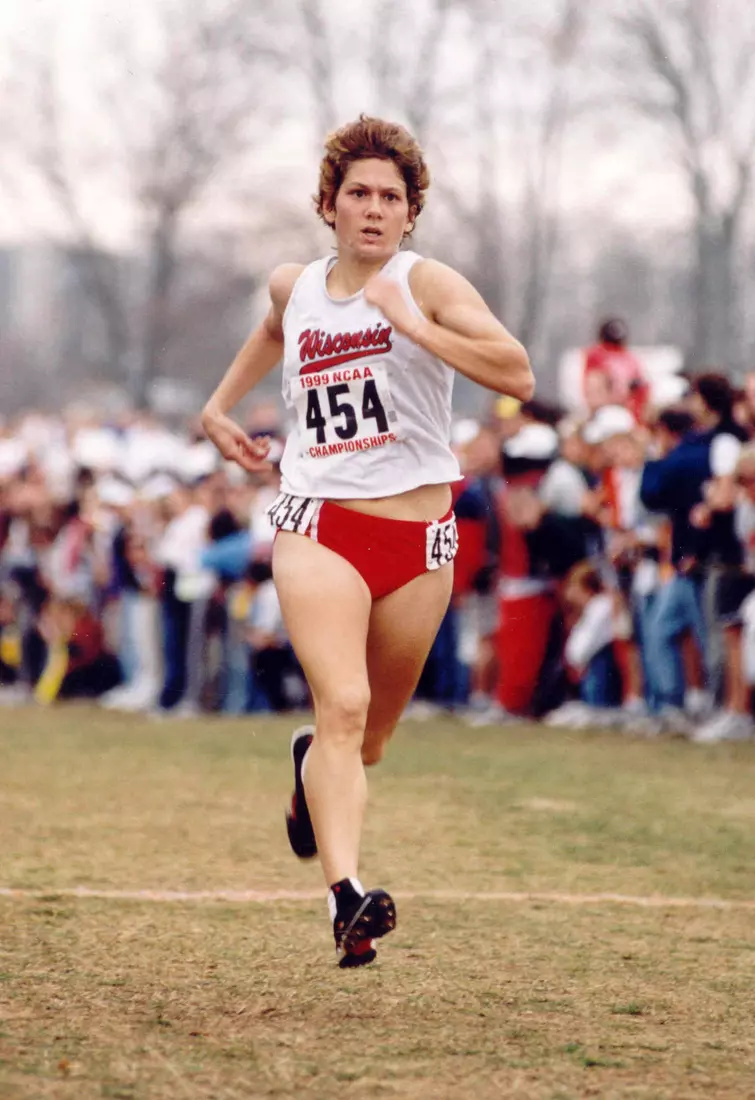
The moment that defined Palmer-Cordes came in the NCAA cross country meet in 1999. A sophomore, she startled everyone — including her coach — by winning the individual title in a personal-best time of 16 minutes, 39 seconds for 5,000 meters. It happened on her 20th birthday under a perfectly blue late-autumn sky.
"It really was a dream come true," Palmer-Cordes said. "It's still one of the best days of my entire life."
Peter Tegen, the retired Hall of Fame coach of the Badgers, remembers being initially surprised at the outcome. After all, Palmer-Cordes wasn't seen as one of the favorites in a race that tends to reward maturity and experience.
"An incredible feat," he said of the result. "We had a pretty detailed plan laid out for her. Sometimes when you talk to athletes about tactical plans and things like that, sometimes it goes in one ear and out the other. But, with her, she really seemed to think it was doable.
"It was absolutely mind-boggling the way she went into that race being confident, sort of armed with a plan that she believed in."
Palmer-Cordes joined Hall of Famers Cathy Branta (1984) and Kathy Butler (1995) as the only UW women to win the biggest race of the college cross country season. Branta and Butler, a two-time Olympian, were seniors when they did it.
Butler was a volunteer assistant coach for her alma mater when Palmer-Cordes came to Madison and made an immediate impression.
"She was just so tough," Butler said. "She had all the physical capabilities as well, but she could just push hard."
This is the same Butler who battled Graves' disease — an autoimmune affliction that affects the thyroid gland and can cause blood clots, heart failure and strokes if not treated properly — for a good chunk of a running career that saw her compete for Canada in the 1996 Summer Olympics and Great Britain in the 2004 Games.
Butler said the NCAA cross country meet is no ordinary event.
"It's not like winning a track race," she said. "It's everyone coming together from all distances."
It's 3,000, 5,000 and 10,000-meter specialists dueling with milers and steeplechasers. It's a melting pot of talent, tactics, technique and endurance. It's contested outdoors, of course, so the weather and course conditions are up for grabs.
"It's like having six or seven races all in one," Butler said. "That's what makes it so tough. You had to be ready for anything."
Butler, a UW Hall of Fame inductee in 2004, said Palmer-Cordes had the ideal make-up for such a competition.
"I think it suited her mentality of being able to handle all kinds of things," Butler said. "Cross country was perfect for her in that way."
Tegen, who spent 30 years building the UW women's track and cross country programs into national powers, also cited Palmer-Cordes' racing mentality as a strength.
"She seemed to have this inner peace of mind and belief and trust," he said. "She was very calm about everything. She didn't show any fear."
Palmer-Cordes made an immediate impression on Tegen when she came on her campus recruiting visit.
"She impressed me as a calm, balanced person," he said, noting that she was immediately liked by team members. "It seemed like she could focus on the moment. It was all positive that I got from her."
Palmer-Cordes, who didn't venture west of New York until she was 17, loved her future teammates as well as a coach who struck her as genuine.
"Peter was a great encourager," she said. "He also truly believed his athletes were capable of doing anything they wanted to. It showed in how he coached us."
Tegen, she said, scheduled weekly workouts Mondays, Wednesdays and Fridays. The rest he left up to the student-athlete.
"He expected you to be running on your own," Palmer-Cordes said. "If you wanted to be that (high) caliber, you needed to have the self-discipline to do that. He really put a lot of responsibility on his athletes, which was great. Those who really wanted to excel, did."
Palmer-Cordes spent the second half of her Wisconsin running career fighting a formidable demon. She was diagnosed with a severe case of compartment syndrome in both legs. That's where the thin layer of skin around her calf muscles stopped expanding like it's supposed to, creating a build-up of fluid, pressure and nerve damage.
Palmer-Cordes had five surgeries, four of which took place between June of 2001 and July of '02, and none were successful. An example of that toughness Butler described came in 2000 when Palmer-Cordes finished third in the NCAA meet despite not being able to train properly because she was in so much discomfort.
"She didn't have it easy," Butler said of Palmer-Cordes, "but she made it happen."
Palmer-Cordes will never forget meeting with her surgeon after her fifth surgery. He told if he saw her again, he would have to amputate.
"Devastating," she said.
"It was just sad that it had to end that way," Butler said.
"Heartbreaking," Tegen said.
But while Palmer-Cordes left Madison with a year of athletic eligibility remaining, she did so with a neat consolation prize. Her husband, Jared, was a member of the men's track and cross country teams. They recently bought their farm from his parents.
Erica fills the running void by teaching a daily 5 a.m. spin class and, when she has time, lifting weights at the local YWCA.
The Palmer-Cordes family is in the midst of a comprehensive project. They've traveled to every state with the exception of Alaska, Hawaii and New Mexico. They're scheduled to cross off New Mexico and Hawaii early next year. They hope to do all 50 by the time Erica and Jared turn 50 in 2029.
Traveling away from the farm isn't easy. When Erica got the call from UW Director of Athletics Chris McIntosh, telling her of her hall of fame nomination and the ceremony Sept. 9, her first thought was the challenge it presented.
"It's September. It's harvest. It's hard to get there," she said. "Do I have to come?"
Yes, the Palmer-Cordes contingent will be there.
Erica said farming and running have similar demands.
"Running is very intense and farming is very intense," she said. "You have a small window to get your crops in and get your crops out."
When you're healthy and successful, the payoff can be breathtaking.