Bryans opens home and heart to help fill a need
April 20, 2016 | Women's Rowing, Andy Baggot
Badgers rowing coach supports domestic abuse victims by caring for their pets
Bebe Bryans has long had a place in her heart for animals. After learning of a need in the community, the Wisconsin women's rowing coach now has a place in her home for them, as well. In doing so, she supports victims of domestic abuse by taking in members of the family that otherwise have nowhere to go. | From Varsity Magazine
 |
||
|
BY ANDY BAGGOT
UWBadgers.com Insider
Bebe Bryans was at her yoga class five years ago when she read something that changed her life in an extraordinary way.
She happened across a studio newsletter highlighting the work of Megan Senatori, the co-founder of a non-profit, all-volunteer organization called Sheltering Animals of Abuse Victims.Bryans, the Wisconsin women's rowing coach, read how SAAV works with the Dane County Humane Society and the Domestic Abuse Intervention Service to provide safe, temporary homes for animals caught up in abusive households.
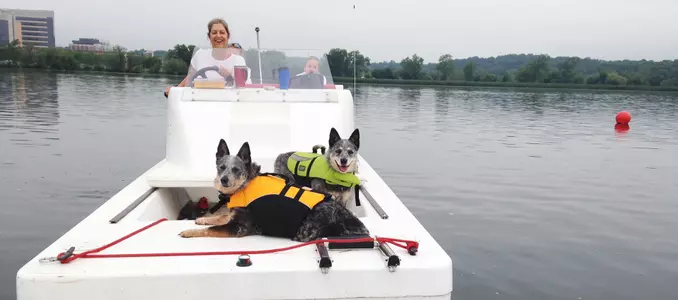
Bryans thought about her beloved four-legged family members, Australian Cattle Dogs named Maddie and Callie, and her history of working with the Humane Society long before she ever made Madison her home in 2004.
Bryans thought about her role as a guide for young women — her desire to teach them, empower them and help them harness their self-esteem — and she became inspired.
"I read this article and it was like an epiphany," she said. "I don't have a lot of time to volunteer. I don't have a lot of money to give. But I can do this."
Thus an exercise in fulfillment, enlightenment and caring began.
"I know as a woman, the way I feel about my animals — my family — if I was in an abusive situation and had animals, I wouldn't leave if I couldn't bring them with me," Bryan said. "I'd stay."
That reflects current research which shows up to 48 percent of victims delay leaving an abusive relationship out of fear of what would happen to their animals in their absence. Since most shelters for the abused aren't equipped to take in pets even in an emergency, many victims choose suffering over salvation.
Which is why SAAV is so important and why participants like Bryans are so vital to the cause.
Bryans is one of the roughly 50 foster home volunteers utilized by SAAV, but her involvement in the cause runs deeper than that. She donates Badgers tickets to the DCHS and is involved with community outreach by way of interviews for print and TV stories. She's been a SAAV volunteer since 2011.
"She's a rock star," Senatori said.
"The thing that's hard about our program is you've got to love these little guys for up to 90 days — that's the foster period — and then you've got to give them away.
"The (volunteer caregiver) has to be patient and loving and accepting and kind and diligent. She fosters all of those qualities. She's one of our favorite foster homes."
Bryans, who is single, has made her Near West Side home a refuge to multiple dogs and cats for SAAV. Her longest stint spanned three months. The shortest was two weeks.
"It's sort of like camp," she explained. "These animals come to me — they have a home to go back to — but I'm going to take really good care of them for the couple of months that's needed."
All bonded nicely with Maddie, 16, and Callie, 10, who have a gift for being adaptable as well as lovable. It doesn't matter that Maddie is a centenarian in human years and Callie is deaf.
"They're really good dogs and they grew up in a pack, so it's no big deal," Bryans said.
According to Senatori, applications to be foster caretakers have to be approved by SAAV as well as the Dane County Humane Society. Once that's done, volunteers must participate in two orientation sessions that include insights into domestic violence.
Since SAAV became established in 2003, Senatori said more than 200 animals have been placed in temporary housing with five cases currently active.
Bryans said the mechanics of the confidential operation are "brilliant." It typically starts with a call from someone in distress.
"When anyone contacts DAIS, one of first questions is, 'Do you have an animal that you're worried about?'" Bryans said. "If they say yes, they're put in contact with the Humane Society to take the next step.
"The thing that's hard about our program is you've got to love these little guys for up to 90 days — that's the foster period — and then you've got to give them away."
"When it's finally time for them to actually leave their (abusive) situation, they already have the paperwork in place. They can just drop their animal off for the SAAV program."
It could be a dog or cat. It could be a horse, gerbil or a ferret. It could be fish, turtle or snake.
"The word goes out to the foster homes and whoever can take that animal does," Bryans explained. "Usually the animal's placed within 24 hours, if not faster."
If the match becomes unwieldy for any reason — let's say the foster animal doesn't mesh with the owner's — then a change can be made.
Safety and discretion are the hallmarks of the process.
"I never know who the owner is. The owner never knows who I am," Bryans said. "The people at the Humane Society and DAIS don't know. No one knows where that animal is except Megan at SAAV and the coordinator at the Humane Society.
"So we're safe and the animal is safe and the victim is safe. It's a very comfortable situation for everybody."
Bryans keeps a scrapbook of all her temporary visitors. She takes pictures of those under her care and forwards them along with regular updates to the owner via SAAV.
"I have to turn off the locator to my phone so that there's no record of where they are," Bryans said ominously.
Of course, Bryans wonders about the unknown family and how its members are getting along without their cherished pet.
"All the time," she said. "Every day."
That thought keeps Bryans focused on the task.
"My job is to keep this animal happy," she said. "They're going to be well taken care of and mom — or dad — knows that's happening. They don't have to worry about it."
Senatori has been to Bryans' home and seen her in action.
"She's super loving and on top of it and chill about it," Senatori said. "She's just very welcoming and patient."
Bryans said one case in particular, her first, galvanized her commitment to the cause.
When she went to pick the dog up she was given a three-page letter from the owner about the specifics of his care, including favorite toys, blanket and eating habits.
"When she dropped him off she left him with nothing," Bryans recalled. "That is how drastic her situation was. She had to bail quickly.
"That, to me, made me really that much more invested because I could put myself in that situation."
Bryans calls SAAV a "brilliant organization" for the way it unifies and serves a growing need.
Senatori said having someone like Bryans involved is critical.
"She's a role model in the community," Senatori said. "She has really embraced this cause, too. That has helped raise an awareness in the community."
It's amazing how much blind trust is involved in this exercise. The victim must have it with the volunteer. The volunteer must have it with their pets. The animals must have it with their caretaker.
"It's such a great alternative to the options," Bryans said.
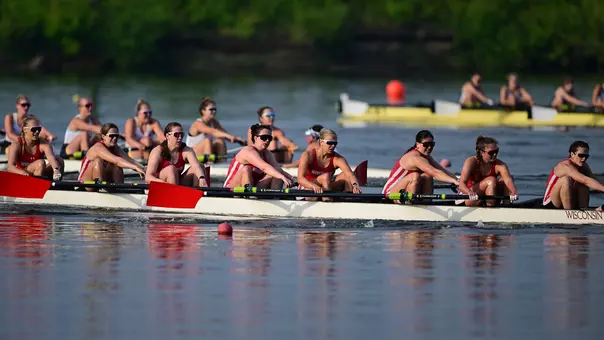
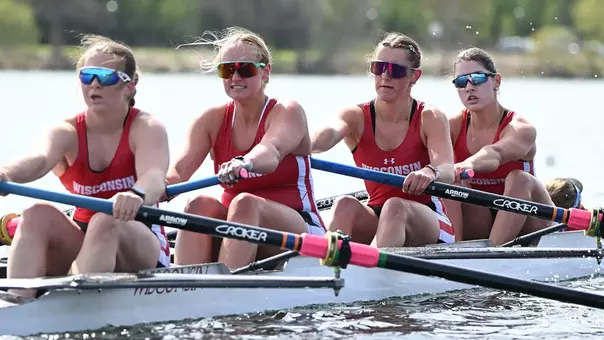
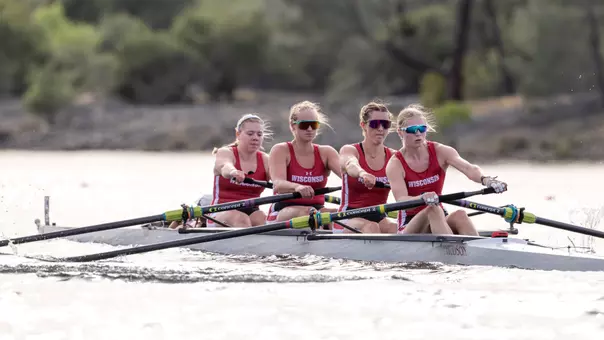
It's not uncommon for Bryans' dogs to join her in the motor launch for UW practices like ones leading up to this week's regatta on Devil's Lake in Baraboo. Both animals wear lifejackets and enjoy being part of the action.
The Badgers are ranked 12th nationally heading into the Big Ten Conference/Big 12 Conference Challenge that includes Iowa, Kansas, Minnesota and Oklahoma.
"Dealing with animals is a lot like dealing with kids," Bryans said. "If you're just steady and consistent and have a certain level of expectation that is ongoing and there isn't a lot of ups and downs thrown in, it's probably going to work."
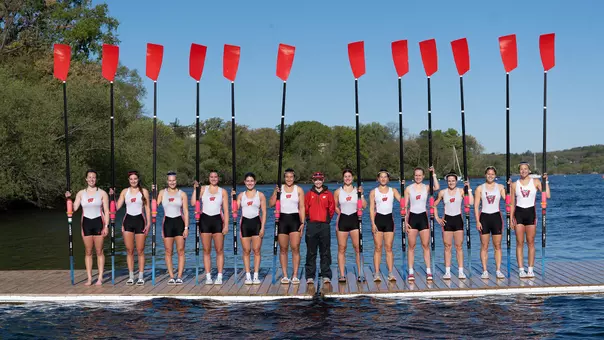
Bryans grew up in San Francisco and coached at Georgetown and Michigan State before making her way to UW. Her openweight boats have qualified for the NCAA championships eight straight years and 10 of the last 11. Her current edition might be her best.
"This team is special," Bryans said.
In the midst of being the first women's rowing coach at Michigan State, Bryans said she began fostering dogs for the Humane Society of Lansing. Her commitment to the cause grew from there.
The only limitation Bryans has is that she can't take in an animal during the UW season because of the travel involved. She said her last boarding episode came over the winter.
Bryans insists that anyone can volunteer for this operation.
"You just have to be a caring person," she said. "It's not rocket science. It's not a year-long commitment.'
Bryans maintains she's not into cats, but that hasn't prevented her from twice boarding a feline.
"If you're a service-oriented person then you can do it," she said. "It's just what I do."
Every case requires some level of adjustment.
"The last dog that I had was a handful," Bryans said. "She was young. Fairly large, and was just not necessarily that well trained. She was a handful."
But her dogs, especially 16-year-old Maddie, set the tone by being patient and welcoming.
"She's the barometer because the world revolves around her now," Bryans said. "As long as she's fine."
Bryans will never meet the families she's helped, so what's the benefit?
"I'm helping someone that could be me," she said. "I'm helping someone. That's all. I can.
"It's something that I can do that helps somebody else. That's it."
Bryans has the same philosophy about coaching.
"I like to win," she said. "I'm the most competitive person I know. But I want these women to learn how great they can be. That's why I do what I do.
"This is sort of different, but I'm able to touch someone I will never know. It has nothing to do with me. It's all about this animal and its person being in a better place."