First down is first line of defense for Badgers
September 26, 2016 | Football, Andy Baggot
Keeping opponents behind the chains keeps Wisconsin moving in right direction
 |
||
|
BY ANDY BAGGOT
UWBadgers.com Insider
MADISON, Wis. — If you're looking for a subtle trend that defines the quality of the Wisconsin defense so far this season, here you go:
Facing second down, UW opponents have needed to travel an average of 8 yards to pick up another first down.
That translates to a significant advantage.
It means the Badgers have fewer play-calling threats to worry about because a pass is more likely than a run on second-and-long.
That translates to a strategic advantage because Wisconsin defenders are free to attack with greater abandon.
It helps to explain why eighth-ranked Wisconsin has one of the best overall defenses in the nation heading into its Big Ten Conference duel at fourth-rated Michigan.
The Badgers stand seventh in scoring defense (11.8 points allowed per game), 10th in rushing defense (80.5 yards per outing) and 12th in total defense (277 yards per contest).
UW also ranks 11th in limiting opponents to a third-down conversion rate of 24 percent (11-for-46).
All those measurements will be severely tested Saturday when Wisconsin (4-0 overall, 1-0 Big Ten) makes its first visit to Michigan Stadium in Ann Arbor since 2010.
The Wolverines (4-0, 1-0) feature a supremely balanced offense that averages 230 yards rushing, 238 yards passing and ranks fourth nationally in scoring per game at 52 points.
But while UW players and coaches spoke of their opponent in respectful tones Monday, at least one wore a look of bemusement at the idea that the visiting team is a 10-point underdog.
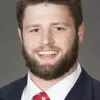
"We'll try to hang in there," senior outside linebacker Vince Biegel said.
The Badgers are used to this by now. Most everyone projected them to lose vs. then-fifth-ranked LSU in the season opener on Sept. 3. Most everyone expected them to lose to then-eighth-rated Michigan State in their Big Ten opener last Saturday.
UW won both — 16-14 over LSU and 30-6 over the Spartans — thanks in part to its ability to force the issue on early downs. It's a trend that's grown more pronounced every week.
LSU was forced to negotiate an average of 7.1 yards on second down. Akron had to go 7.8 yards. It was 8.1 for Georgia State and 8.6 for Michigan State.
"If you can be productive on first down then you've got the upper hand as the offense," Wisconsin coach Paul Chryst said during his weekly press conference Monday. "Conversely, if you can limit their success on first down, now (they're) chasing the sticks."
Not only was Michigan State 4-for-13 converting on third down, it faced second down and 10 or more yards 11 times.
The defending Big Ten champion Spartans are built with many of the same offensive intentions as UW — own the line of scrimmage, establish the run, control the clock and do so with a physical edge — but they couldn't get into that rhythm.
"The No. 1 goal on our board was to stop first downs," Biegel said. "When we stopped them on first down they became a team they didn't want to be."
In other words, out of its comfort zone.
Michigan State quarterbacks Tyler O'Connor and Brian Lewerke attempted a combined nine passes on second down and completed three for a grand total of 15 yards. That 33-percent completion ratio can be traced to the pressure applied by Biegel and junior T.J. Watt, whose career-best 2.5 sacks earned him Big Ten Player of the Week honors Monday.
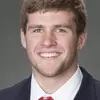
"Stopping the run on first down is huge for any defense because it diverts them from their game plan," Watt said. "It allows you to let loose and go after the quarterback a little bit more."
That extra pressure translated to three interceptions for the Badgers on Saturday at Spartan Stadium, a place they hadn't won since 2002.
Despite two wins over top-10 opponents and despite pushing its road winning streak to a program-best eight games, Wisconsin players heard questions Monday about a perceived lack of respect from the masses.
Informed of the point spread, Watt's eyes narrowed.
"It doesn't matter," he said. "Put us against the wall we'll fight till the end."
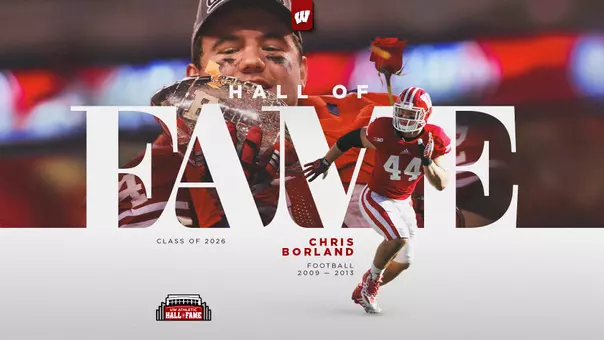
Biegel seemed heartened to hear nice words from Michigan coach Jim Harbaugh, who described UW as a "team of Chris Borlands."
A former All-America linebacker for the Badgers, Borland played for Harbaugh when the latter was coaching in the NFL with the San Francisco 49ers.
"That's a compliment to us," Biegel said.
But Biegel and his defensive teammates haven't forgotten the questions that came to life after last season. Fresh off managing the stingiest scoring unit in the nation, defensive coordinator Dave Aranda left for the same job at LSU.
Biegel said the players "heard it loud and clear" from naysayers that the UW defense would likely have its struggles this season.
"I think when Dave Aranda left, they were thinking, 'What are they going to do now with these three-star recruits now? What kind of defense will the Wisconsin defense be?'" Biegel said.
"We play with a chip on our shoulder and it shows on Saturdays."
Biegel smiled when informed of the point spread.
"We'll have people continue to overlook us," he said. "That's fine. We're going to continue to go out there and prove people wrong."
Watt said the UW defense — overseen by first-year coordinator Justin Wilcox — is deep, focused and unselfish.
"We don't have a weak spot," he said. "I'm not saying that because I'm being cocky. I truly feel like we have 11 guys on defense — plus depth — that can get the job done."
It doesn't matter what the doubters think or say.
"We don't look at any of that stuff in all honesty," Watt said. "We look at film, we take care of the controllables week in and week out and we come out on Saturday and try to execute."
So far, it's worked out pretty well.