Baggot: A tale of Kings and a special cup
October 15, 2021 | Football, General News, Andy Baggot
Historic trophy survives generations and Hurricane Hazel to return to Madison
BY ANDY BAGGOT
UWBadgers.com Insider
MADISON, Wis. — When Hurricane Hazel made landfall along the border of North and South Carolina in October of 1954, it was a Category 4 storm with lethal intentions. By the time it had run its course, Hazel is estimated to have killed more than 1,000 people and done $382 million of damage in the Caribbean, the U.S. and Canada. The death toll and destruction was such that Hazel was retired from use as a name for North Atlantic hurricanes.
Phil King lived in the small town of Oak Island, North Carolina, where he owned a beautiful home overlooking the Atlantic Ocean. On Oct. 18, Hazel completely demolished the residence, which included a display case filled with trophies and plaques belonging to a turn-of-the-century Wisconsin football legend.
This is the story of how one of those trophies literally resurfaced and found its way to Madison where it will be formally presented to University of Wisconsin Athletic Department officials on Saturday during the Badgers' non-conference football game with Army at Camp Randall Stadium.
This is the story of how three men named King — three generations, all named Phil — came to have a stake in the moment.
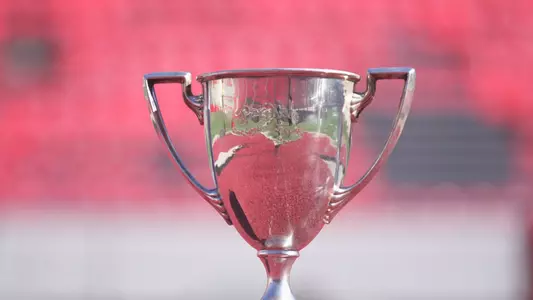
The simple silver cup — which measures about the length of a football — is dedicated to King's father, who coached UW to its first Big Ten Conference title in 1896 and added two more in 1897 and 1901.
In eight seasons at Wisconsin, King was 65-11-1 (.897) with 55 shutouts. He was the winningest coach in UW football history until Barry Alvarez showed up and went 119-74-4 (.614) from 1990 to 2005. King also helped the Badgers win two league baseball championships.

Before coming to Wisconsin, King was a football and baseball standout at Princeton where he once scored 11 touchdowns in a game and was a star second baseman for the Tigers despite newspaper accounts that said he was pretty small. One account listed him at 5-foot-5 and 155 pounds. King reportedly was the first Princeton employee to be paid for his coaching services.
King's football resume at Princeton was such that he was inducted in the National Football Hall of Fame in 1962. Also honored during that ceremony in New York City was Pat O'Dea, the legendary "Kangaroo Kicker" who starred for the Badgers from 1896 to '99.
When the elder King died in 1938, his son inherited nearly 50 pieces of memorabilia and had them on display in a large case in the living room of a beach-front home that he shared with his 17-year-old son.
King, now 80, said the hurricane completely destroyed the home.
"Nothing survived," he said.
Or so everyone thought.

|

|

|
Six years after the hurricane, a shrimper brought his net out of the Atlantic and watched as an odd-looking cup adorned with barnacles tumbled to the deck. The shrimper could make out the name "Phil King" etched in the gray metal, but not much else. He went about the task of tracking down the owner.
"He brought it to my dad," recalled Phil, who was then in his early 20s, "and asked, 'Is this yours?'"
The coach's son was overwhelmed. He took the cup, the last remnant of the collection his father bequeathed him when he died, to a jeweler in nearby Wilmington, North Carolina, and had it restored. When the coach's son died in 1988, the cup was passed along to his son.
Phil King, a former Navy SEAL and retired FBI agent, will be at Camp Randall on Saturday night to present his treasure to the school. He said his children aren't inclined to take possession of the trophy. He said a workout friend got him in touch with Doug Tiedt, the UW senior associate athletic director for student services. It's not yet been determined where the cup will be displayed.
UW officials had the trophy refinished at Goodman Jewelers in Madison. It brought out fine details that were otherwise difficult to identify.
"To Phil King, Our Coach and Friend," is engraved across the top of the cup and dated November 1901. The names of team members are etched on the back panel.
The '01 team was King's best at UW. That club finished 9-0 overall, 2-0 in the Big Ten. The Badgers outscored their foes 317-5 with eight shutouts.
Giving the trophy to UW, the school that made his grandfather a legend, was not easy for King.
"It makes me cry that I never got to meet him," he said.