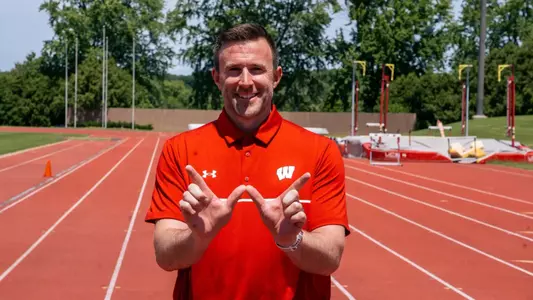
Chris Solinsky: Leading Wisconsin Into the Future
July 22, 2026 | Men's Cross Country, Men's Track & Field, Women's Cross Country, Women's Track & Field
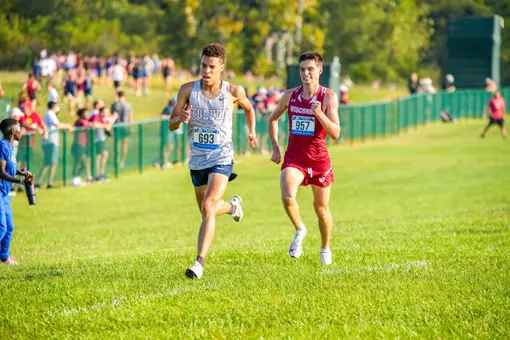
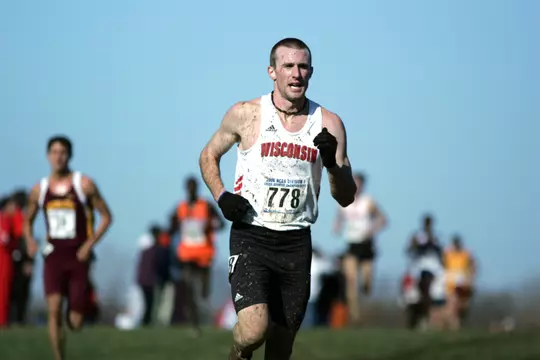
MADISON, Wis. – Sheer chaos. A 10-kilometer grass-chewed gauntlet running through a tunnel of noise. The sort of race that makes the hair stand up on your arms, your neck, your back. Yet in the end, as Chris Solinsky crossed the finish line in third place at the 2005 NCAA Cross Country Championship, he felt a certain quiet peace. Turning around, he could see his fellow teammates not far behind—Matt Withrow in ninth and Antony Ford coming in at 14th to wrap up the dominant 37-point team win for Wisconsin.
Despite being one of the most decorated athletes in program history, this remains Solinsky’s favorite moment from his time with the Badgers. For the five-time NCAA individual champion, the 2005 team victory was special.
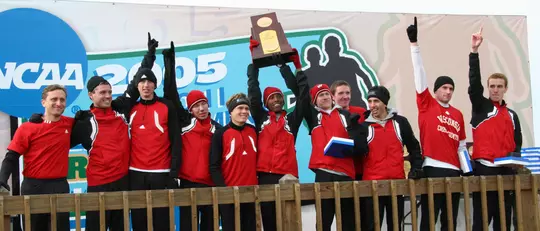
“I'm a big team guy,” Solinsky said, “I was lucky to be part of some really great teams. I was never part of a losing Big Ten team.”
On Thursday, June 4, Wisconsin officially announced that Solinsky would be returning to his roots as the new Director of Track & Field and Cross Country, taking the baton from the retiring, renowned coach Mick Byrne.
After graduating from Wisconsin in 2007, Solinsky took his talents to the next level as a coach. He served as an assistant coach at the College of William & Mary before moving on to the University of Florida in 2018 and the University of Oregon in 2023.
Finally, he returned home to Wisconsin earlier this year, where he served as the Executive Director of the W Club, but the pull of the track was always there.
“It's a dream come true,” Solinsky said. “From the moment I finished my eligibility here, the goal was to be right back here.”
"It's more fulfilling to see an athlete be on the podium."Chris Solinsky, UW Director of Cross Country and Track & Field
With over a decade of coaching experience under his belt and a laundry list of personal achievements as an athlete, Solinsky has found that he derives the most fulfillment from seeing the athletes he coaches reach goals they could only have dreamed of.
“For me, it's more fulfilling to see an athlete be on the podium,” Solinsky said. “I've coached a national champion, I've coached national runners-up, conference champions and I think my appreciation for what they're experiencing derives a lot from knowing what it feels like. It fills your cup when they accomplish what they’ve been striving for.”
Transitioning from being a world-class competitor to a world-class coach required a rewiring of Solinsky’s training philosophies. A lot goes into coaching, and you can’t simply follow an X’s and O’s approach.
“It's important as a coach to coach the person, not the event,” Solinsky said. “I think it's really easy to have a system of training for a specific event, but it's important if you're going to have success to be adaptable and coach the athlete within the framework of the event.”
That relational approach was put to the test at Florida and Oregon, where he was tasked with managing elite programs with high expectations. By treating his runners as individuals instead of point-scoring assets, he unlocked another gear in them.
“Nobody wants to feel like just a number or just a mark,” Solinsky said. "I have a strong appreciation for developing really capable and successful young adults. If we can do that and pour into our kids while they're here, they're going to perform better, but they're also going to be happier and go on to be successful in whatever field that they pursue.”
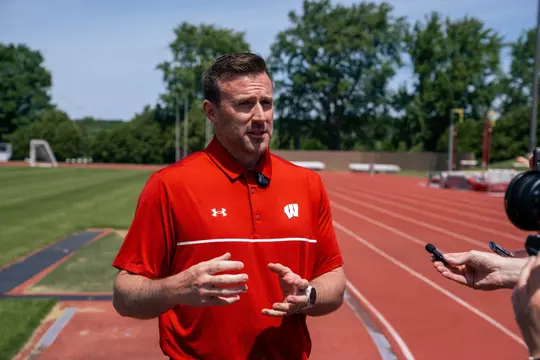
This shift from competitor to mentor didn’t surprise the man who played a role in Solinsky’s collegiate career. Legendary former Wisconsin men’s track and field head coach Ed Nuttycombe remembers seeing the seeds of a leader planted early in Solinsky’s undergraduate career.
“When the coaches were talking to other athletes or the coaches were talking amongst themselves, he always seemed to be very interested in what was going on and what was being discussed,” Nuttycombe recalled. “Looking back on that now, I suspect that at the very least, whether he knew he would end up being a coach or not, he had a strong passion to know what the heck was going on.”
"He would do anything for anybody and for the team."Ed Nuttycombe, former UW Head Coach
Nuttycombe remembers Solinsky for his role in creating the strong culture that helped Wisconsin win throughout his time with the program.
“He is about as loyal and true-blue a teammate as you can conceive of,” Nuttycombe said. “He would do anything for anybody and for the team, for the coaches, whatever. It was like that from day one, coming in. He was just that kind of person."
Now Solinsky faces the challenge of stepping into the very seat that Nuttycombe handled for three decades. Nuttycombe believes that Solinsky’s “people-first” philosophy is the exact tool required to build a successful program.
“In track and field, the whole package is important,” Nuttycombe said. “If I were to give him any advice, I would say make sure that you have a relationship with everyone on your team. It doesn’t have to be a lot, and it’s different for every area. It’s also different for every athlete because they are individuals, too. But they know that you care, and like I said earlier, they’ve got your back, you’ve got theirs and he will do that. Because that’s his nature.”
For the first time in his career, Solinsky has found himself at the helm, leading the event groups beyond distance. Through his experience with other elite programs across the nation, he has discovered the importance of surrounding himself with a staff foundation he can trust.
“I think it's important to surround yourself with beasts that know what they're doing in their event area and empower them and give them the resources to be successful,” Solinsky said. “I definitely want us to be a complete track team, and I think that's very possible here. I'm excited to put our flavor on what Wisconsin track and field looks like going forward.”
Maintaining that upward trajectory means adapting and improving in the transformed collegiate recruiting landscape. The modern era of NIL has turned track and field into a competitive landscape, and enticing new recruits is more important than ever.
“I think our new indoor facility is a big selling point. It's going to put us on par with any of the Southern schools that can practice outside all year round,” Solinsky said. “We've got a 305-meter track, we've got a 118-meter straight away, so we can do 10 hurdles… we have our long and triple jump, the pits up top, and we have an amazing throws area and pole vault situation that allows us to do whatever we need to do all year long.”
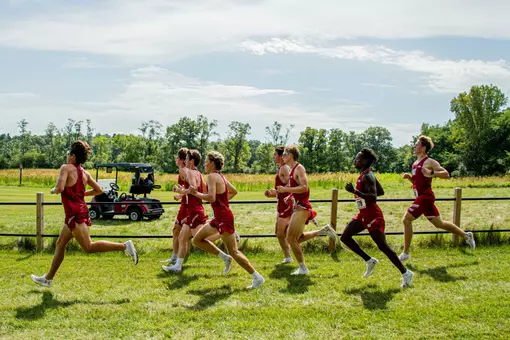
“Cross country-wise, we have the most premier cross country course in the land. But again, I think it is important to acknowledge our past and the legends and legacies that have come before us, but also be cognizant of how this is our time to put our stamp on what Wisconsin track and field looks like going forward and finding the right people that buy into that vision.”
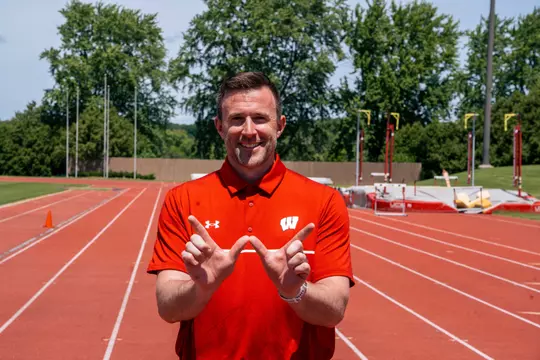
That vision is no longer a distant dream, but the goal moving forward. For the kid from Stevens Point who grew up aiming to conquer the running world, the future of Wisconsin track and field is happening right now.
Sheer chaos. Ten kilometers of screaming fans lining the course. The sort of race that takes your full attention, leaving no room for distraction. This time, Solinsky isn’t pounding the grass. He’s on the sideline, watching his team compete against the best competition in the nation. Yet he’s more satisfied than ever.
“I don't care if anyone ever says my name again. I want the people that I work with to experience the things that I was able to experience because it was special, and it was amazing.”